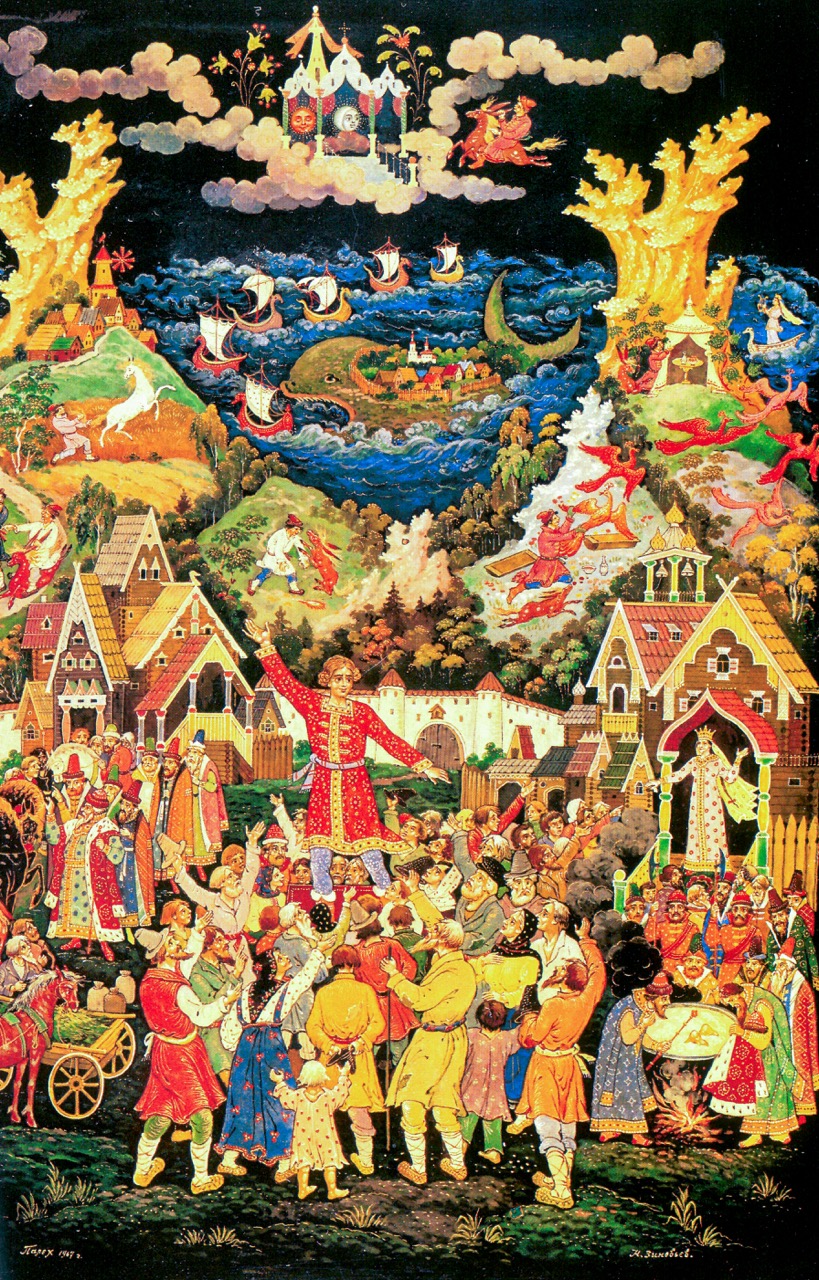
Lacquer paintings on wood emerged in Russia in the first half of the 18th century. Russian lacquer miniature art began in Danilkovo and Fedoskino near Moscow, initially producing papier-mâché snuffboxes. After the 1917 revolution, displaced religious icon painters adapted their fine tempera and gold-leaf skills to decorate functional items, expanding into boxes, panels, and wearable art like brooches across four distinct village traditions.
These four villages (schools) were Fedoskino, Palekh, Mstyora, and Kholui.
This exhibition showcases lacquer boxes and brooches from all four schools; as well as, icons, stacking dolls, and decorative plates – all from a private collection