By Shana Thornton
You might think that you need to be a student to view the public art located on the Austin Peay State University campus, however, walking onto the campus and accessing public spaces is open to all citizens in the community. Much of the public art is located outside and easily accessible, especially during the summer months when the campus isn’t as crowded with students. The Public Art Initiative at Austin Peay State University has carved out space to add new sculpture to APSU’s existing artworks. Some of these pieces are on temporary loan to the university, while others are part of a permanent display.
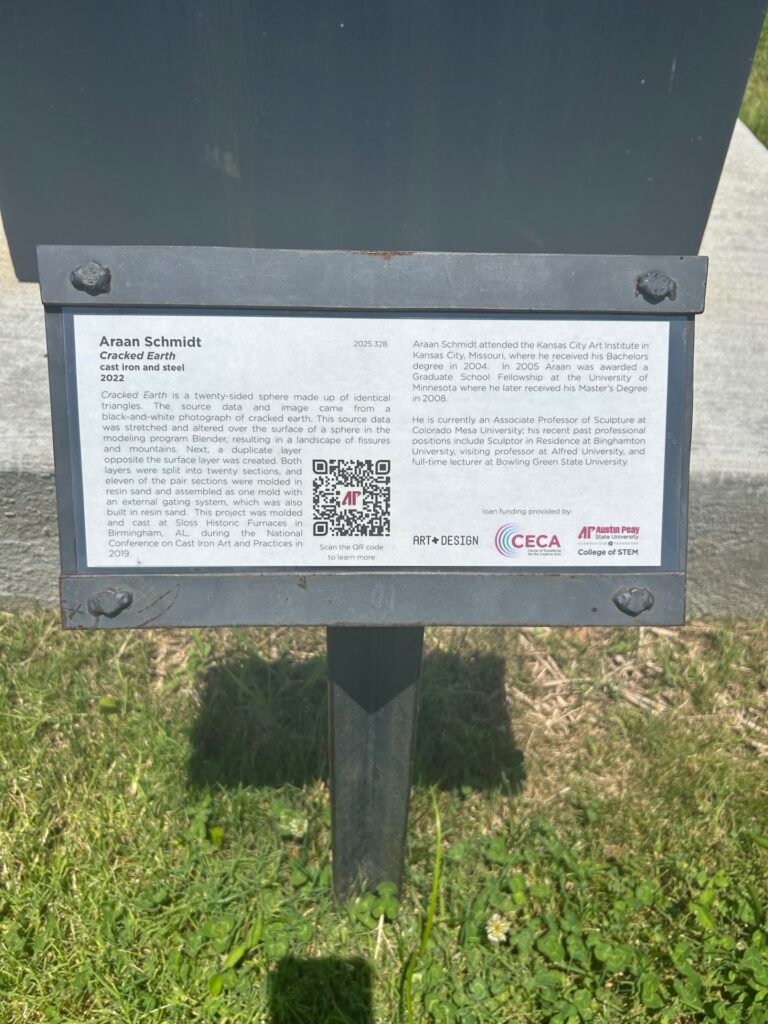
Last year, in 2025, APSU’s Public Sculpture Initiative, led by Professor Luke Warren, installed the first public sculpture on the campus since 2018. That artwork, Cracked Earth, was created by Araan Schmidt, a professor of sculpture at Colorado Mesa University.
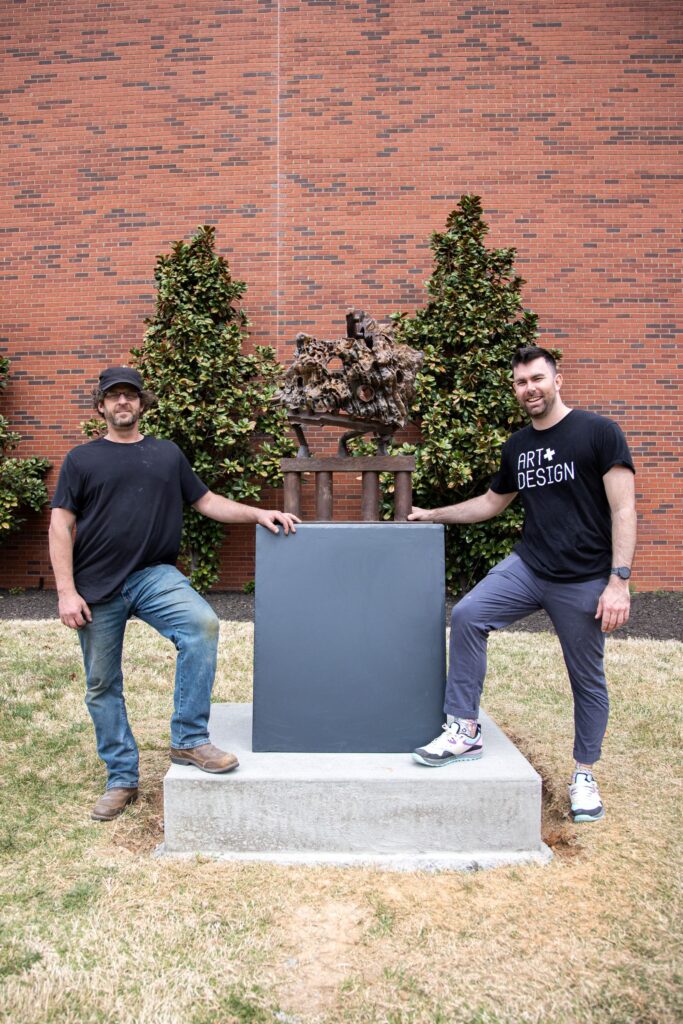
Cracked Earth is cast iron and was installed by Professors Schmidt and Warren along with their students. It is located outside the Art + Design Building in a large meadow-like area called the Arts Quad. While it might look like sculpture just appears in a landscape without a lot of effort, the truth of installations is that they require planning, hard labor, grit, and determination to reach the end goals. Public art has multiple goals – acknowledgement of appearance (whether it is deemed “beautiful” or “captivating” is up to the individual viewer), interaction, representation, and continued storytelling.
As Warren writes in an article about the artwork from Second & Commerce magazine, “There’s also a beautiful sense of continuity and legacy here.” (Read more about Cracked Earth, Araan Schmidt, and more in Luke Warren’s Voices of Impact article in Second & Commerce Fall 2025 magazine here.)
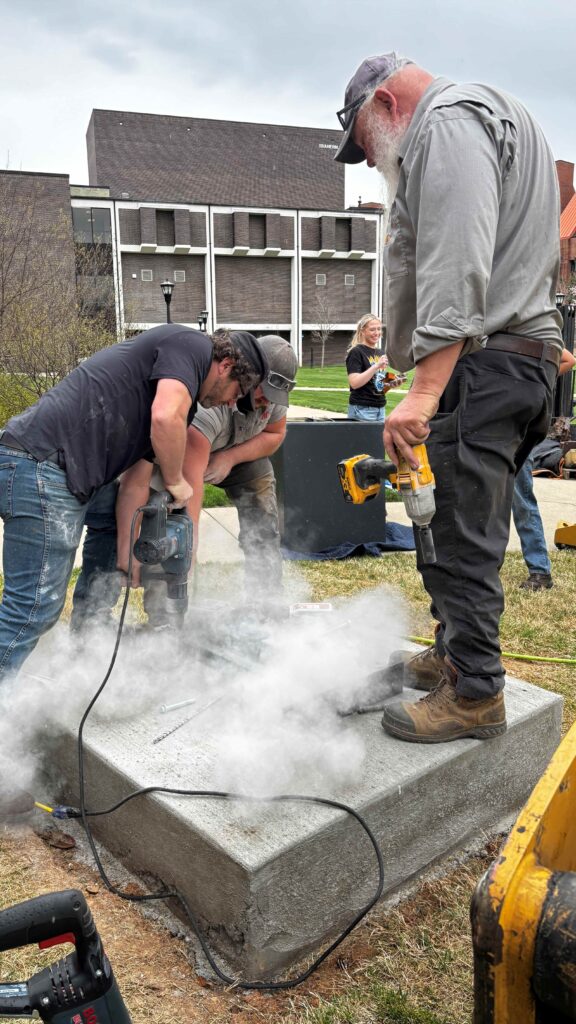
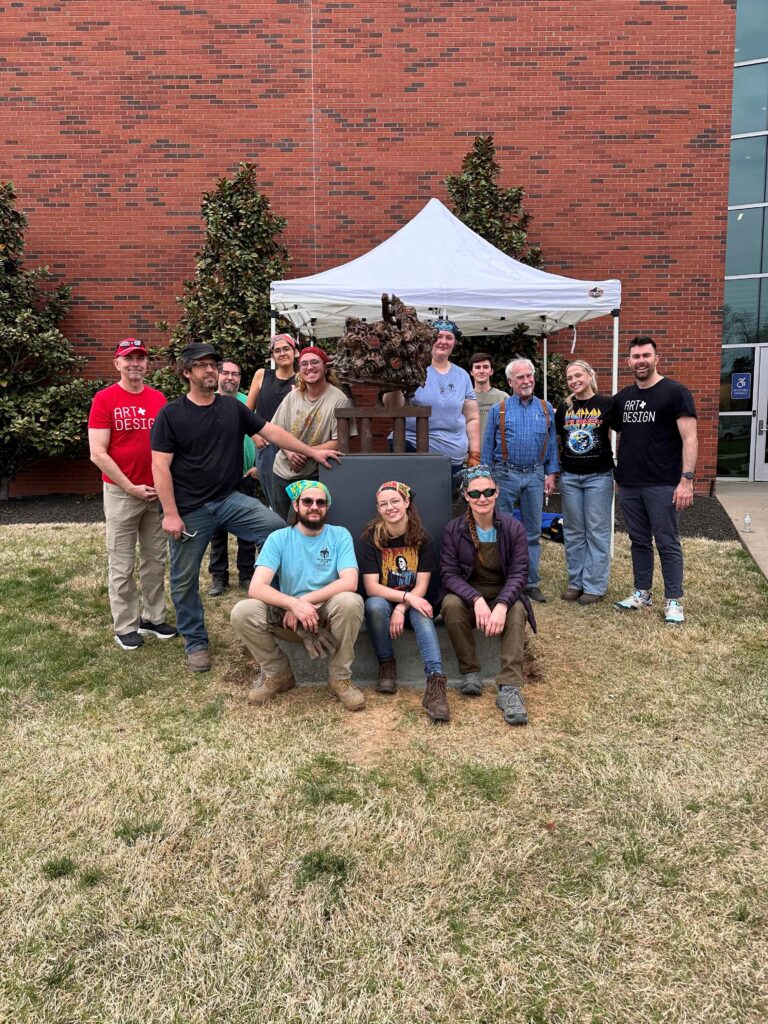
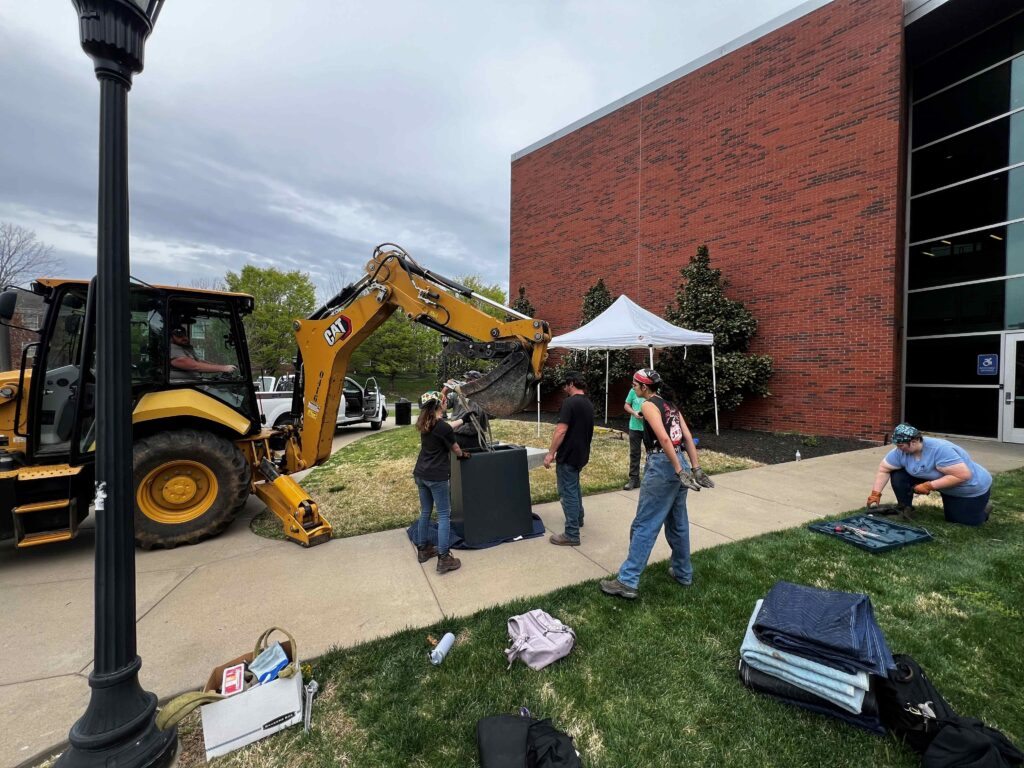
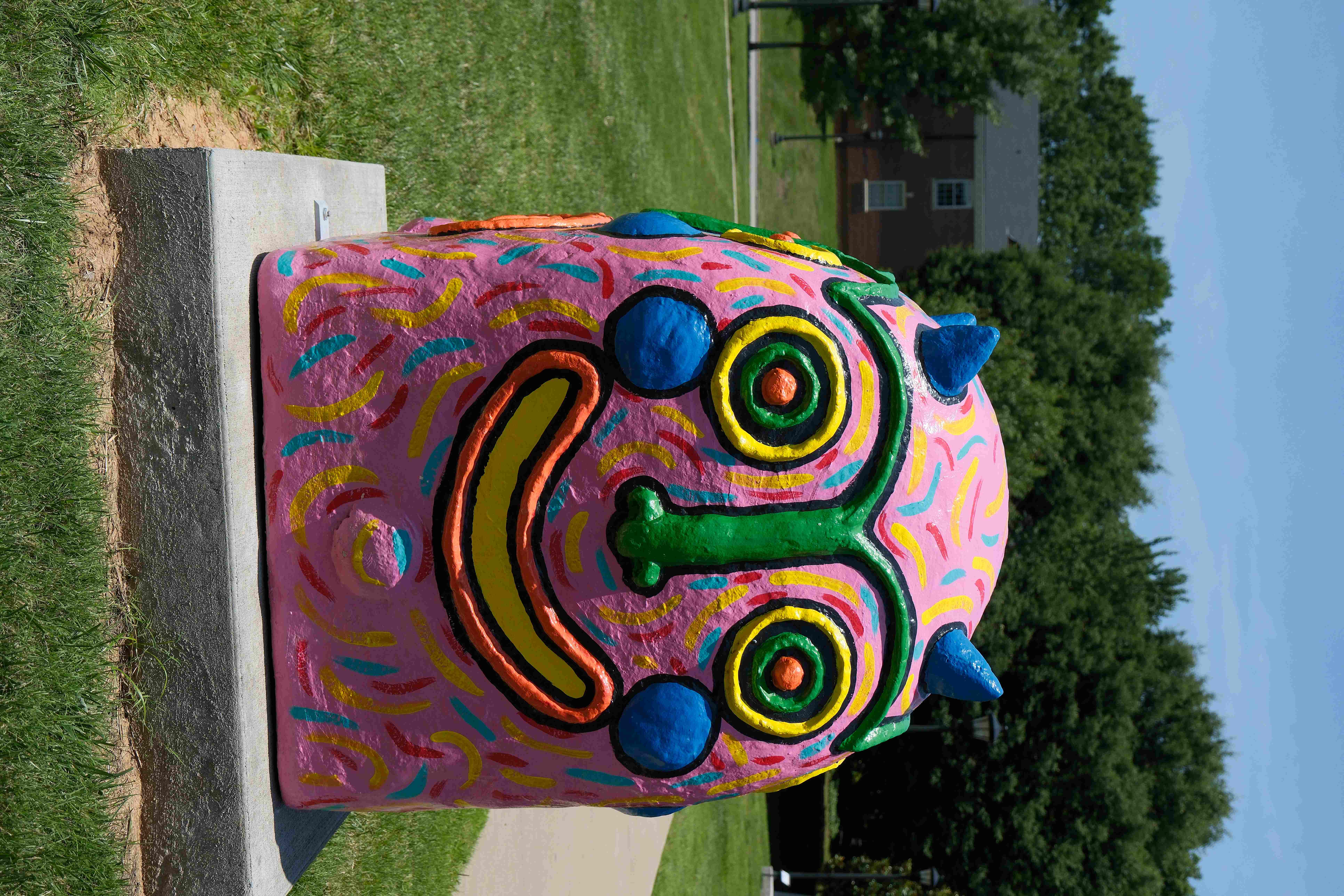
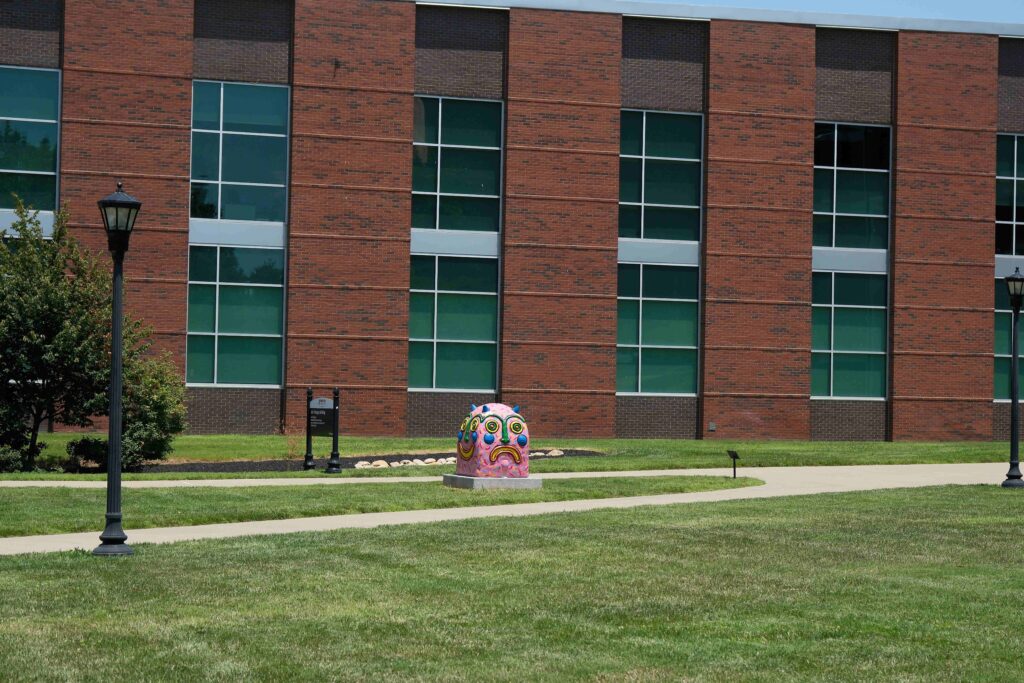
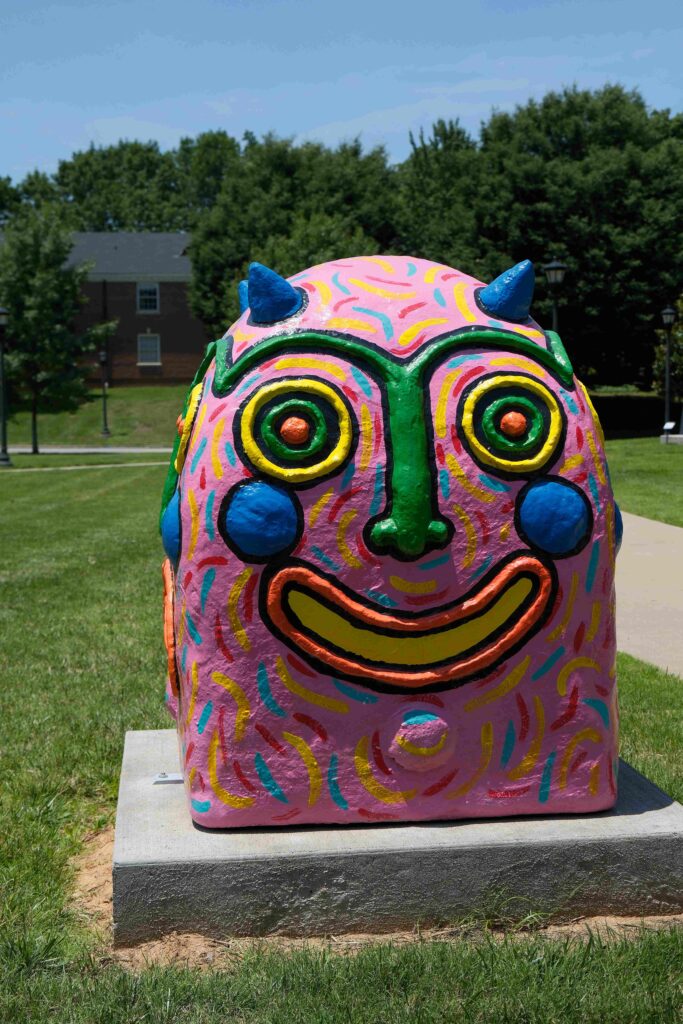
Dumpty Humpty by Brett Douglas Hunter is a multi-media sculpture composed of papercrete, stucco, EPS foam, and acrylic paint on a two-year loan to the university. It was installed on the campus in spring 2026. The shape of the sculpture is four sides with changing faces. Located in the Arts Quad between the Art + Design and Trahern buildings, Dumpty Humpty greets visitors from every direction. A student might go to class with a happy disposition, just as the sculpture shows on one side, but they could leave with a bad pop quiz grade and pass the sad face of Dumpty Humpty. Thus, the sculpture is true to its mission of “suggesting shifting emotions and perspectives.”
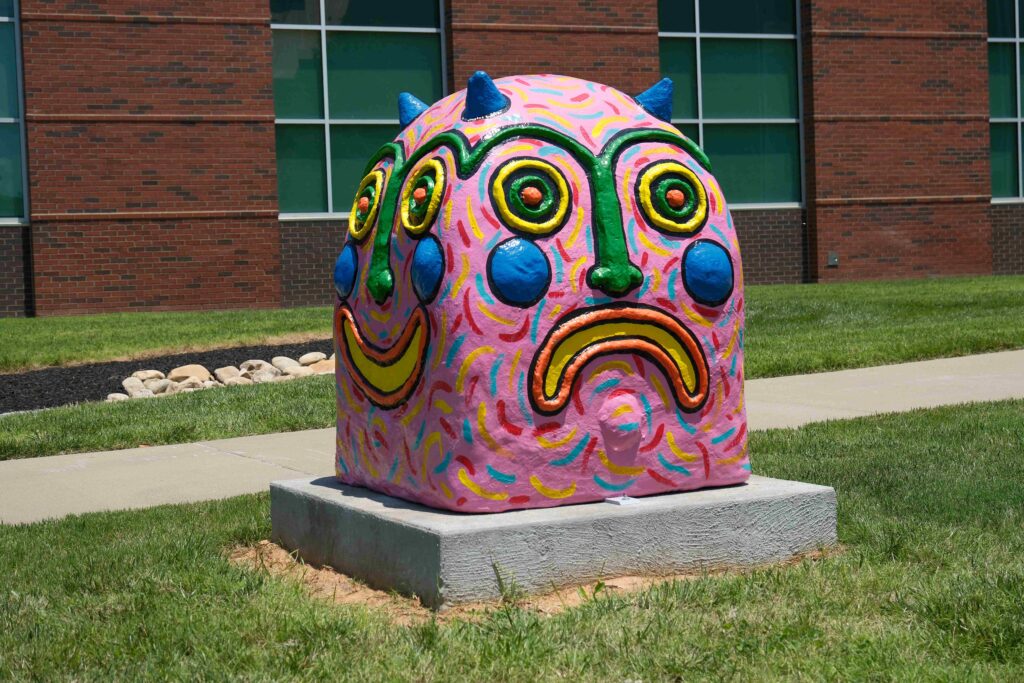
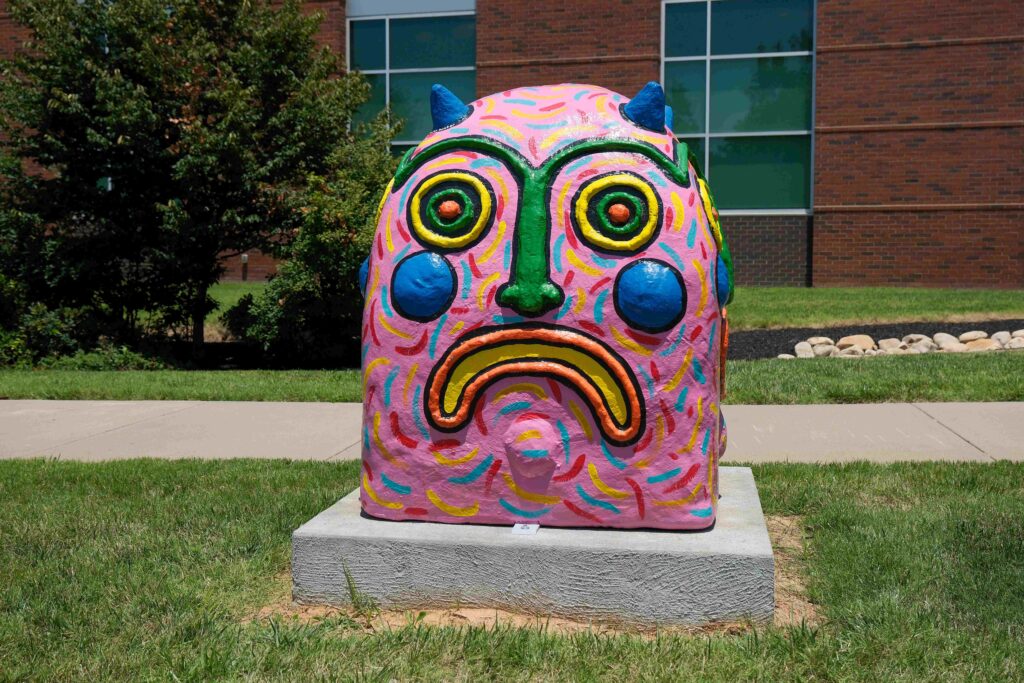
Each sculpture includes an informational panel with details about the sculpture, the artist, and a QR code to more information.
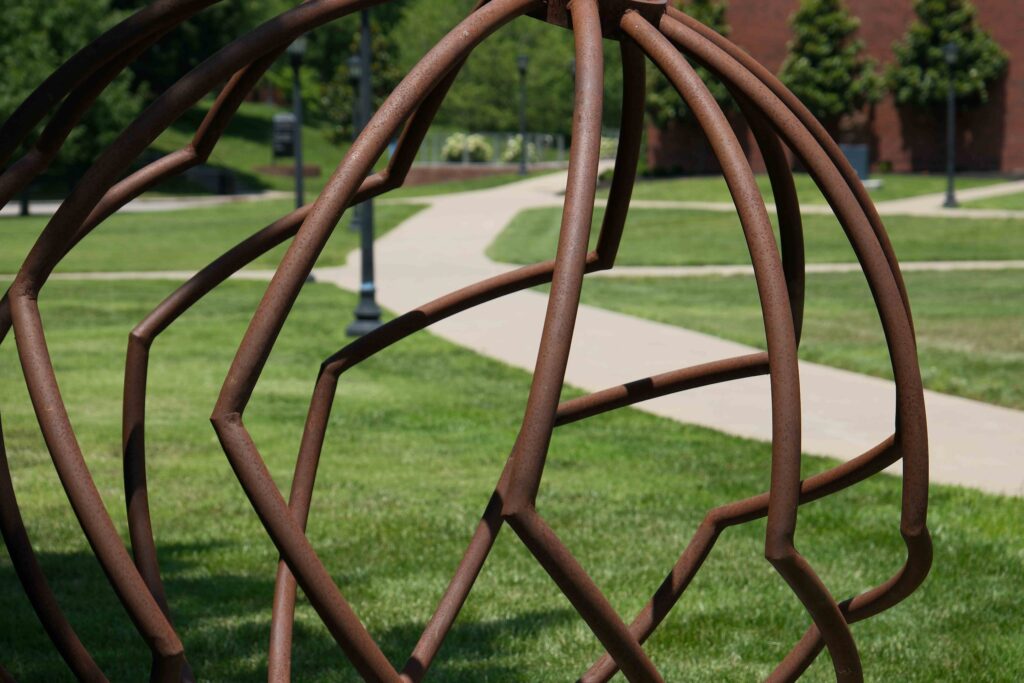
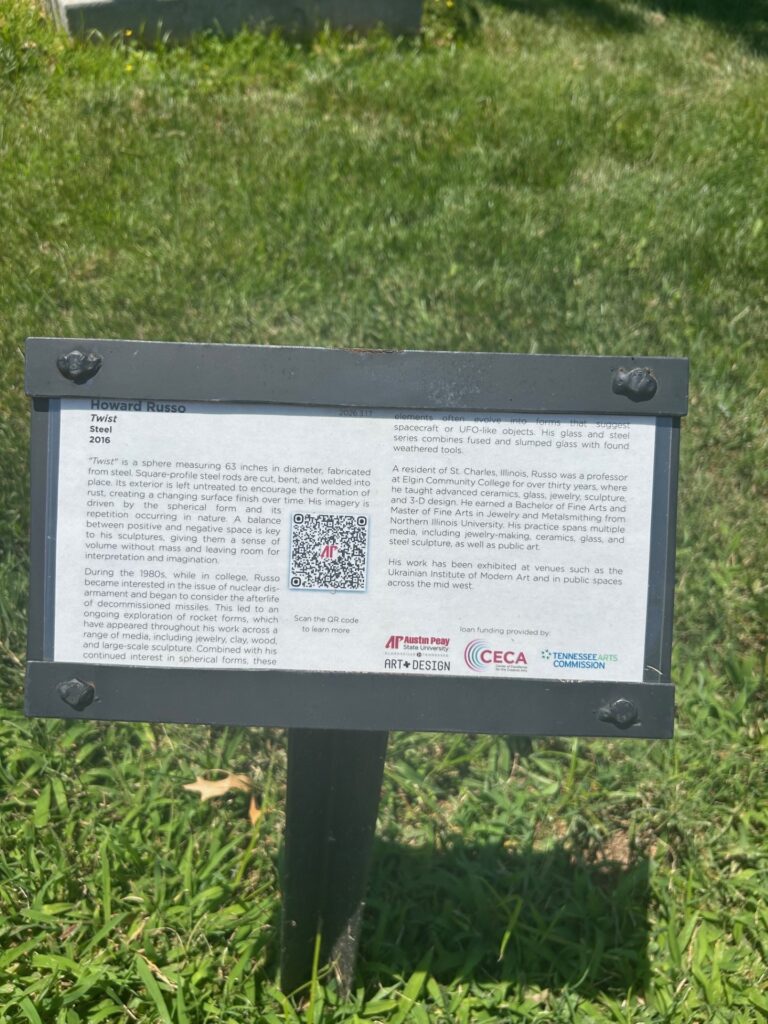
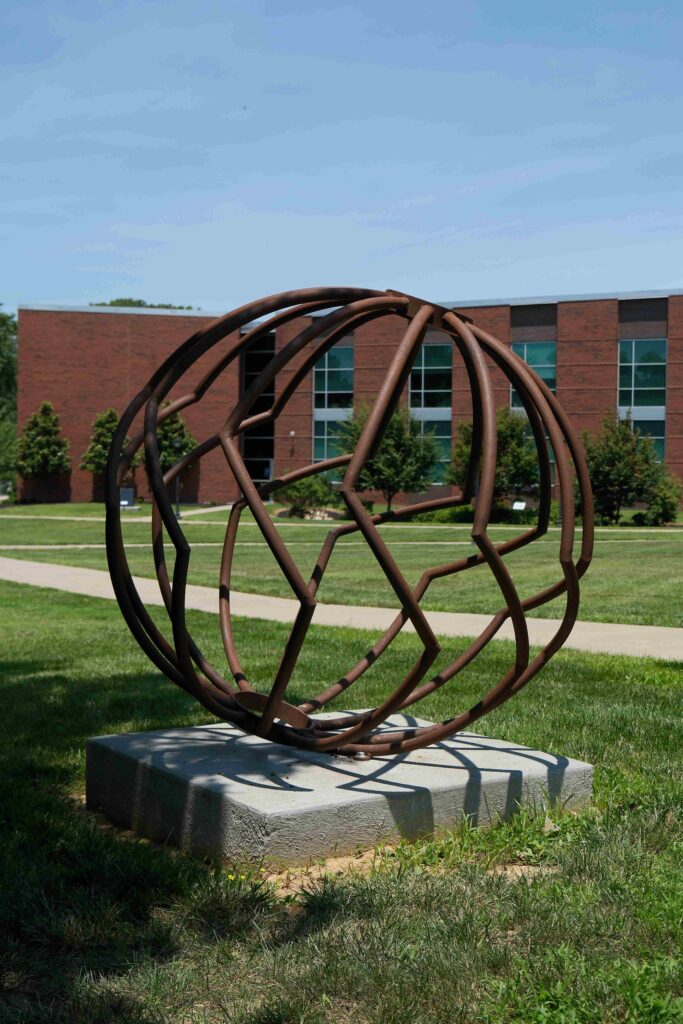
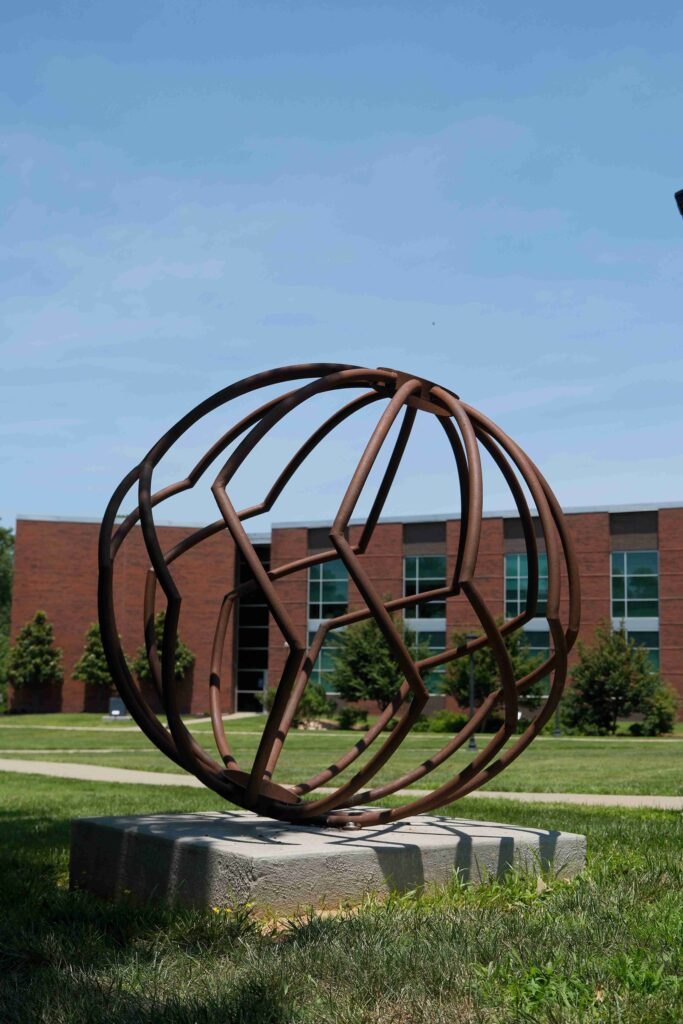
Twist is a steel sculpture by Howard Russo located across the greenspace between Art + Design and the Sundquist Science Building; it is also on loan for two years. Twist is offered as an interpretation of the recurring spherical forms in nature, the changing effect of the environment, and an interest in human manipulation of form. As the informational panel explains, “During the 1980s, while in college, Russo became interested in the issue of nuclear disarmament and began to consider the afterlife of decommissioned missiles.” The sculpture speaks to Clarksville’s connection to Fort Campbell Army Post and our history of being a temporary site of storage for nuclear materials at the Birdcage (Read Brendalyn Carpenter Player’s article about it here).
Both Cracked Earth and Dumpty Humpty are in view of Twist. Together, the three sculptures form a visual story about time and place.
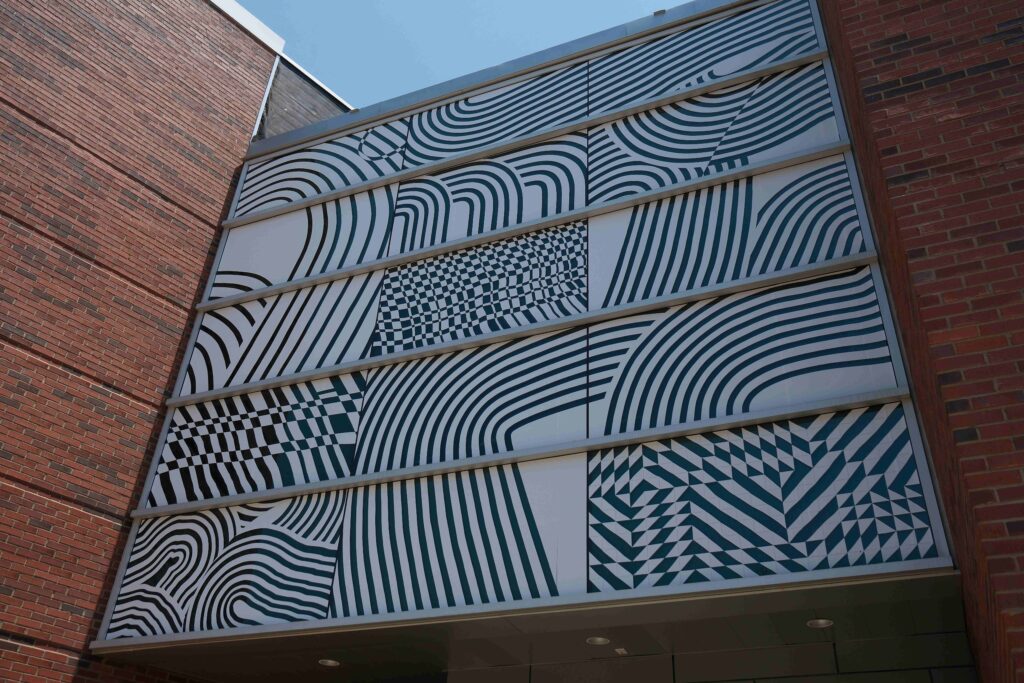
Wall Vinyl Installation by Taro Takizawa is hand-cut vinyl on a glass wall that you can see on the exterior of the Art + Design Building on the entrance facing Harned Hall and closest to the New Gallery. This is a commissioned work between Art + Design Department, the Center of Excellence for the Creative Arts (CECA), The College of STEM, and the Center of Excellence for Field Biology in order to “combine artistic design and scientific knowledge to aid in wild bird conservation.”
Art serves many purposes and can save lives – those of peoples, animals, birds, plant species, and so much more. Art for conservation and preservation is important to the continuation of life. Often, where holes in laws and rules might fail communities, art can offer hope, protection, and connection.
A common problem with large reflective glass windows is that birds will run into the glass, which causes the death of many birds. As it effects all birds, migratory patterns can be disrupted by humans: “Window collisions are the second most common cause of wild bird mortality associated with humans and human infrastructure.”
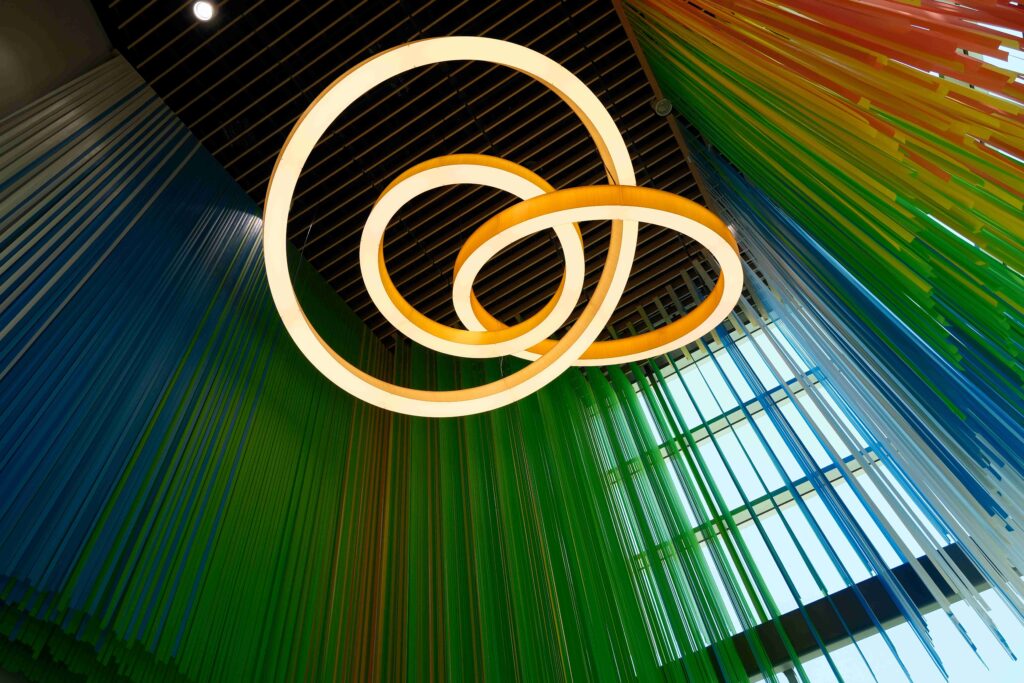
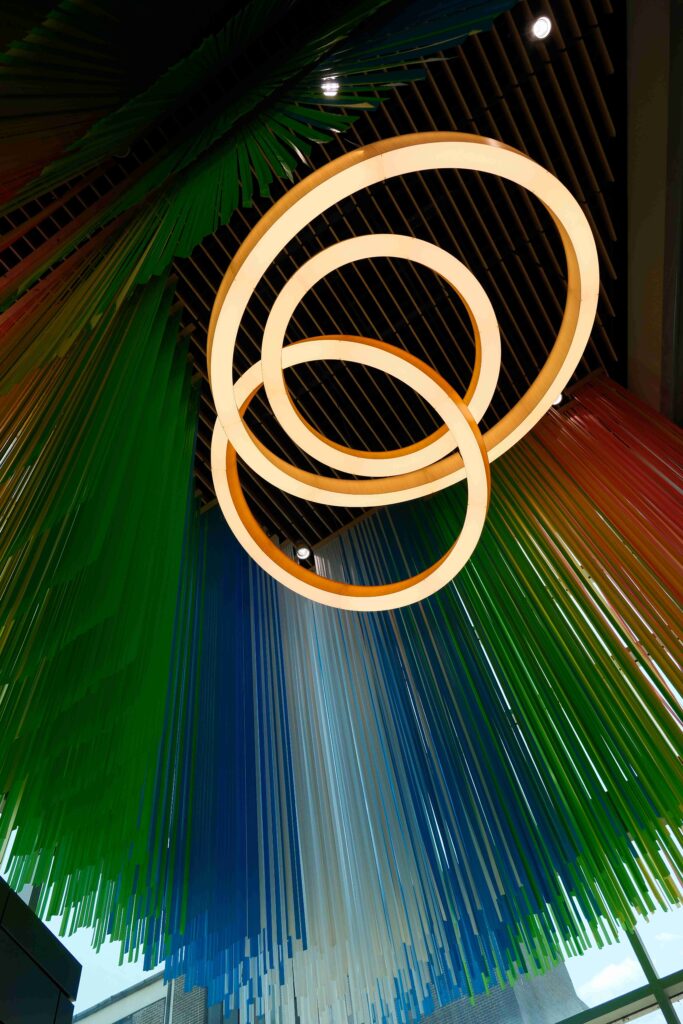
At the other entrance to the Art + Design building, just inside the foyer, a large circular light fixture greets visitors. The three circles are surrounded by colorful strips of fabric that create a nonreflective window.
You might worry about the parking around the APSU campus, and yet, there are parallel public street parking spaces where anyone can park. These are especially located along Marion Street and Eighth Street. It is easier to get one of these parking spaces in the summer when not as many students are taking classes. Parking areas that require an APSU pass are marked.
Public Art Series: This is part of a series. Next, we will share public art at a different location in Clarksville before returning to share more about APSU’s other public artworks.
Other articles about Clarksville’s Public Art:
Importance of Preserving Clarksville/Montgomery County’s Public Art
Public Art in Clarksville: 4 Outstanding Statues
Public Art in Clarksville: 4 Amazing Murals
References:
APSU’s Public Sculpture Initiative

Shana Thornton is the Marketing & Media Manager and Managing Editor of Second & Commerce, the Customs House Museum & Cultural Center’s arts, history, and culture magazine. She is an author and publisher, Founder of the Clarksville-Montgomery County African American Legacy Trail, and the Montgomery County Deputy Historian.